LED light therapy has become one of the most requested treatments in aesthetic practices — and one of the most misunderstood. Between spa masks, at-home gadgets, and professional systems, patients and providers alike are left wondering what genuinely separates one light treatment from another. Photobiodynamic therapy is Skymedic's answer to that question: a protocol that pairs specific LED wavelengths with photosensitizing topical actives, so that light and skincare work as one coordinated treatment rather than two separate steps. This guide explains what photobiodynamic therapy is, how it works at a cellular level, which skin concerns it addresses, and what a complete treatment course looks like — whether you run a practice or are considering the treatment yourself.
What is photobiodynamic therapy — and how is it different from plain LED?
Conventional LED phototherapy uses light on its own. A panel or mask emits one or more wavelengths, and the skin's naturally occurring chromophores — light-absorbing molecules such as those found in mitochondria — do whatever they can with the energy that reaches them. It is a well-established approach, and we cover the wider landscape of light-based treatments in our article Phototherapy in Aesthetics: LED, IPL & Beyond.
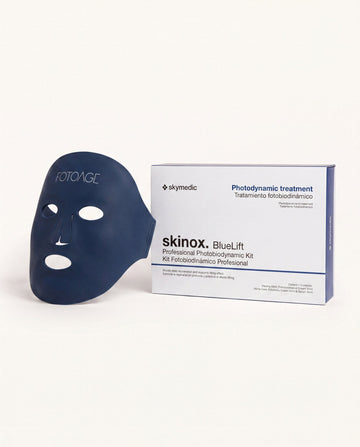
Photobiodynamic therapy goes a step further. Before and during light exposure, the skin is prepared with photosensitizing topical formulations — cosmetic actives selected because they absorb energy at the same wavelengths the device emits. Instead of relying solely on what the skin happens to absorb, the protocol primes the tissue so that light and actives interact where the formulation has been applied. The name describes exactly that: photo (light), bio (skin biology), and dynamic (the interaction between the two). It is the approach behind the Fotoage LED device and the Skinox photobiodynamic range, developed and manufactured by Skymedic in Barcelona under an ISO 13485-certified quality management system.
How it works: wavelengths meet photosensitizing actives
The role of LED wavelengths
Different wavelengths of visible and near-infrared light penetrate the skin to different depths. Blue light, at the shorter end of the visible spectrum, is absorbed mainly in the superficial epidermis, which is why it is traditionally associated with oily, blemish-prone areas. Red light travels further, reaching the deeper epidermis and upper dermis where fibroblasts reside. Near-infrared light penetrates deeper still. Research into photobiomodulation suggests that light in these bands interacts with cellular chromophores — most notably cytochrome c oxidase within the mitochondria — in ways that may influence cellular energy metabolism. The Fotoage device is designed to deliver defined wavelengths, at controlled intensities and exposure times, to support the skin's own renewal processes rather than injuring it to provoke a healing response.
The role of photosensitizing topicals
The second half of the equation is the formulation. Each Skinox professional box contains topicals formulated with chromophore-bearing actives chosen to absorb at the wavelengths used in the corresponding light program. In practical terms, the provider applies the product, selects the matching program on the device, and the light then acts on skin that has been deliberately prepared for it. This pairing is what allows each protocol to be directed at a specific concern: the same device, combined with a different photosensitizing formulation and wavelength setting, becomes a different treatment.
Four skin concerns, four Skinox protocols
The professional Skinox range is organized around the four indications most frequently seen in aesthetic practice. Each box is a complete photobiodynamic kit designed to be used with the Fotoage device across a full course of in-office sessions.
Rejuvenation: Skinox Wrinkles
Skinox Wrinkles is the rejuvenation protocol. It combines red and near-infrared programs with actives designed to help improve the appearance of fine lines, skin texture, and elasticity on the face, neck, and décolletage — the three areas where the first visible signs of aging tend to appear.
Blemish-prone skin: Skinox Blemish
Skinox Blemish addresses acne-related imperfections. Blue-dominant programs are paired with purifying, sebum-balancing actives to help improve the appearance of congested, blemish-prone skin while supporting a calmer overall complexion.
Spots and pigmentation: Skinox Dark Spots
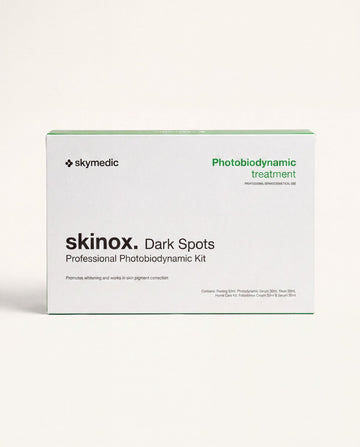
Skinox Dark Spots is directed at the appearance of dark spots and melasma-prone pigmentation. Brightening actives are combined with wavelength programs selected to support a more even-looking skin tone over the course of the treatment.
Redness and reactive skin: Skinox Redness
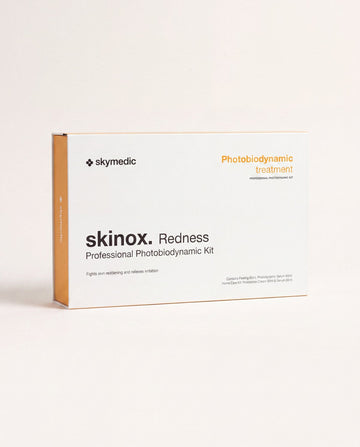
Skinox Redness is formulated for rosacea-prone and reactive skin. Soothing actives and gentle light programs are designed to help improve the appearance of diffuse redness and support the skin's comfort and barrier function.
What a full treatment course looks like
Photobiodynamic therapy is a course, not a one-off. Each professional Skinox box supports twelve in-office consultation sessions covering the face, neck, and décolletage, plus one month of guided home therapy. A typical course runs as follows:
- Consultation and skin assessment. The provider confirms the indication, checks suitability, and selects the appropriate Skinox protocol.
- Twelve in-office sessions. At each visit, the photosensitizing formulation is applied and the matching Fotoage program is delivered to the face, neck, and décolletage. Sessions are typically scheduled one to two times per week.
- One month of home therapy. The box includes a home-care phase so the skin continues to be supported between and after office visits.
- Review and maintenance. After the course, results are reviewed and a maintenance plan — often built around the Skinox Home Treatment range — is agreed on.
For practices starting out, the Fotoage clinic pack bundles the LED device with four professional Skinox boxes, so a practice can offer all four protocols from day one.
Who is it for — and who should wait?
Because photobiodynamic therapy is non-invasive — no needles, no ablation, no significant downtime — it suits a broad range of adult skin types and can be delivered year-round. That said, a proper consultation always comes first, and there are situations where treatment should be postponed or avoided:
- Known photosensitivity disorders or a history of light-triggered skin reactions
- Current use of photosensitizing medication or topicals (always reviewed at consultation)
- Pregnancy or breastfeeding, where a cautious approach and medical advice are recommended
- Active skin infection, open lesions, or recent invasive procedures in the treatment area
- Any undiagnosed skin condition, which should be assessed by a physician before cosmetic treatment
In the US, LED devices of this class are commonly marketed as general wellness or cosmetic devices; photobiodynamic therapy is a cosmetic protocol, and no claims of FDA approval are made or implied.
In-office vs home treatment: which do you need?
The professional and home ranges are designed to work together rather than compete. The in-office protocol delivers the full-intensity program under professional supervision; the home range extends and maintains the work between visits.
| In-office (Fotoage + Skinox professional) | Home (Skinox Home Treatment) | |
|---|---|---|
| Who delivers it | Trained provider in a clinic setting | The patient, following the included guide |
| Light source | Fotoage professional LED device | Topical protocol designed for daily home use |
| Course structure | 12 sessions on face, neck, and décolletage, plus 1 month home phase | Ongoing daily routine after or between courses |
| Best for | Starting a course and treating a defined concern intensively | Maintaining results and supporting skin day to day |
| Range | Wrinkles, Blemish, Dark Spots, Redness | Same four variants, plus Bluelift |
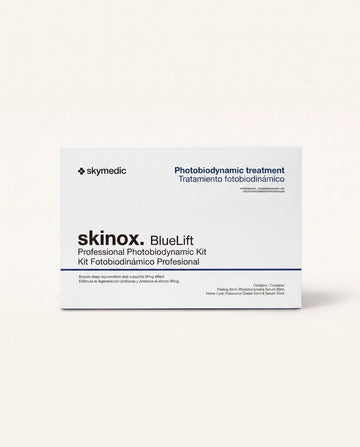
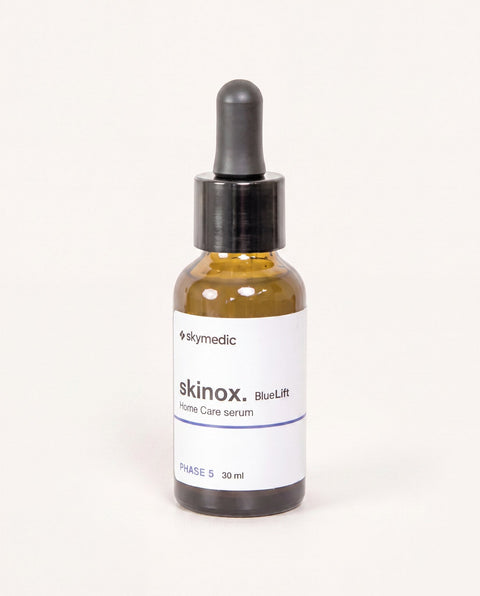
Each home box mirrors its professional counterpart — for example, a patient finishing a rejuvenation course would continue with Skinox Wrinkles Home Treatment — while Bluelift extends the home range with an additional firming-focused option.
Frequently asked questions
Does photobiodynamic therapy hurt? Is there downtime?
No. Sessions are generally described as comfortable and relaxing — a gentle warmth at most. There is no ablation or injection involved, so most people return to their normal routine immediately, with basic sun-smart aftercare.
How many sessions before I notice a difference?
Skin renews gradually, which is why the protocol is built around a twelve-session course rather than a single visit. Responses vary from person to person and depend on the concern being treated, skin condition, and consistency with the home-care phase.
Is this the same as photodynamic therapy (PDT)?
No. Photodynamic therapy is a medical procedure using prescription photosensitizing drugs to treat diagnosed conditions. Photobiodynamic therapy is a cosmetic protocol: it combines cosmetic photosensitizing formulations with LED light to help improve the appearance of the skin, and it does not diagnose or treat disease.
Can it be combined with other aesthetic treatments?
Often, yes — many practices schedule photobiodynamic courses alongside facials or as a complement to other non-invasive treatments. Timing around invasive procedures should always be decided by the treating provider.
Which Skinox protocol is right for me?
That is a consultation question. As a starting point: Wrinkles for visible signs of aging, Blemish for congested and blemish-prone skin, Dark Spots for uneven pigmentation, and Redness for reactive, redness-prone skin. A provider can confirm the best fit — or combine protocols across successive courses.
Next steps
For clinics and providers: if you would like to offer photobiodynamic therapy, register as a professional to access the Fotoage clinic pack, professional pricing, and protocol training. The clinic pack includes the device and all four Skinox professional boxes, so you can treat every major indication from your first week.
For patients: explore the full photobiodynamic collection to find the Skinox Home Treatment that matches your concern, or ask your provider about starting a professional course. Every order ships with fast US shipping, and shipping is free on orders over $100.